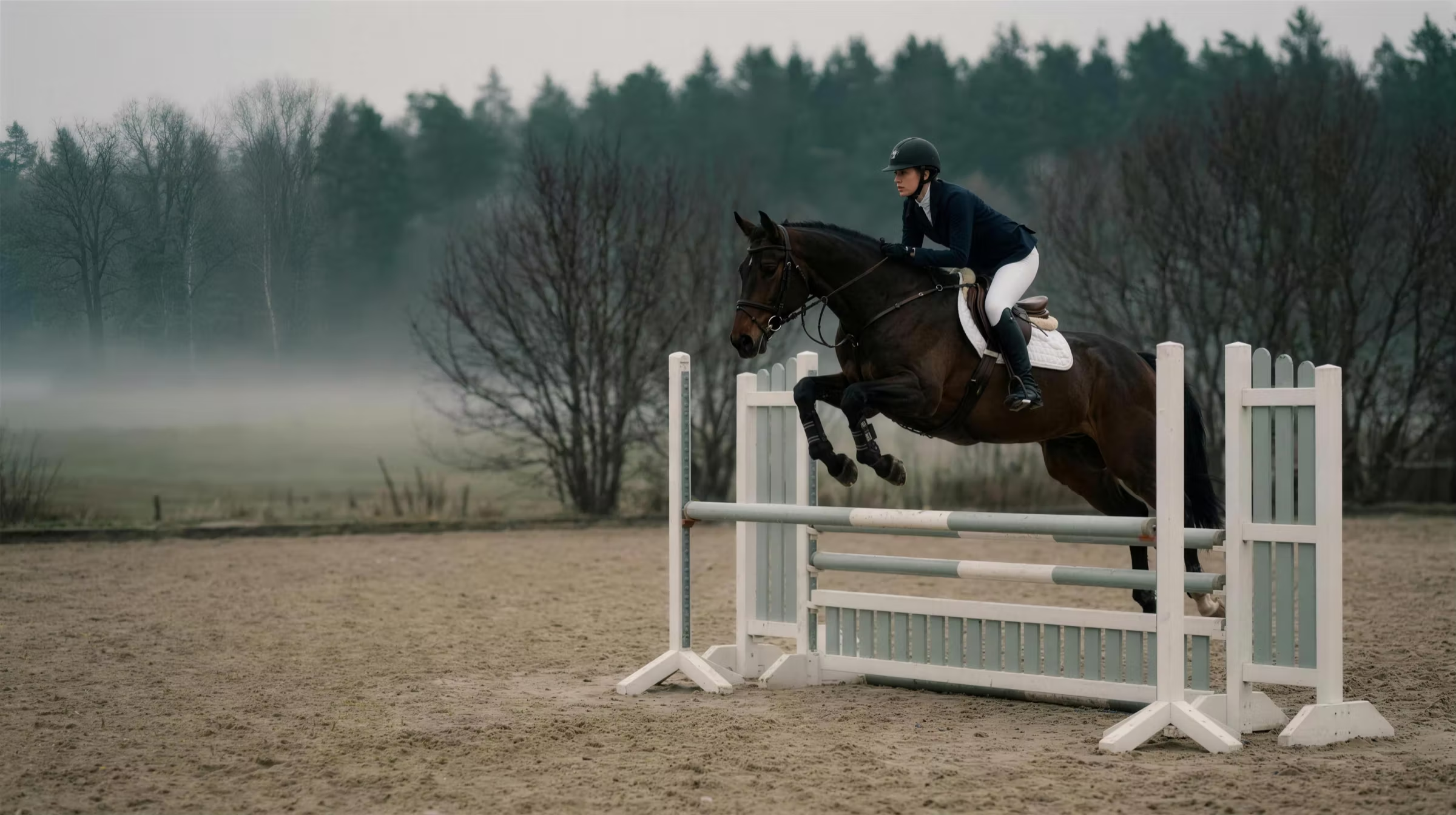
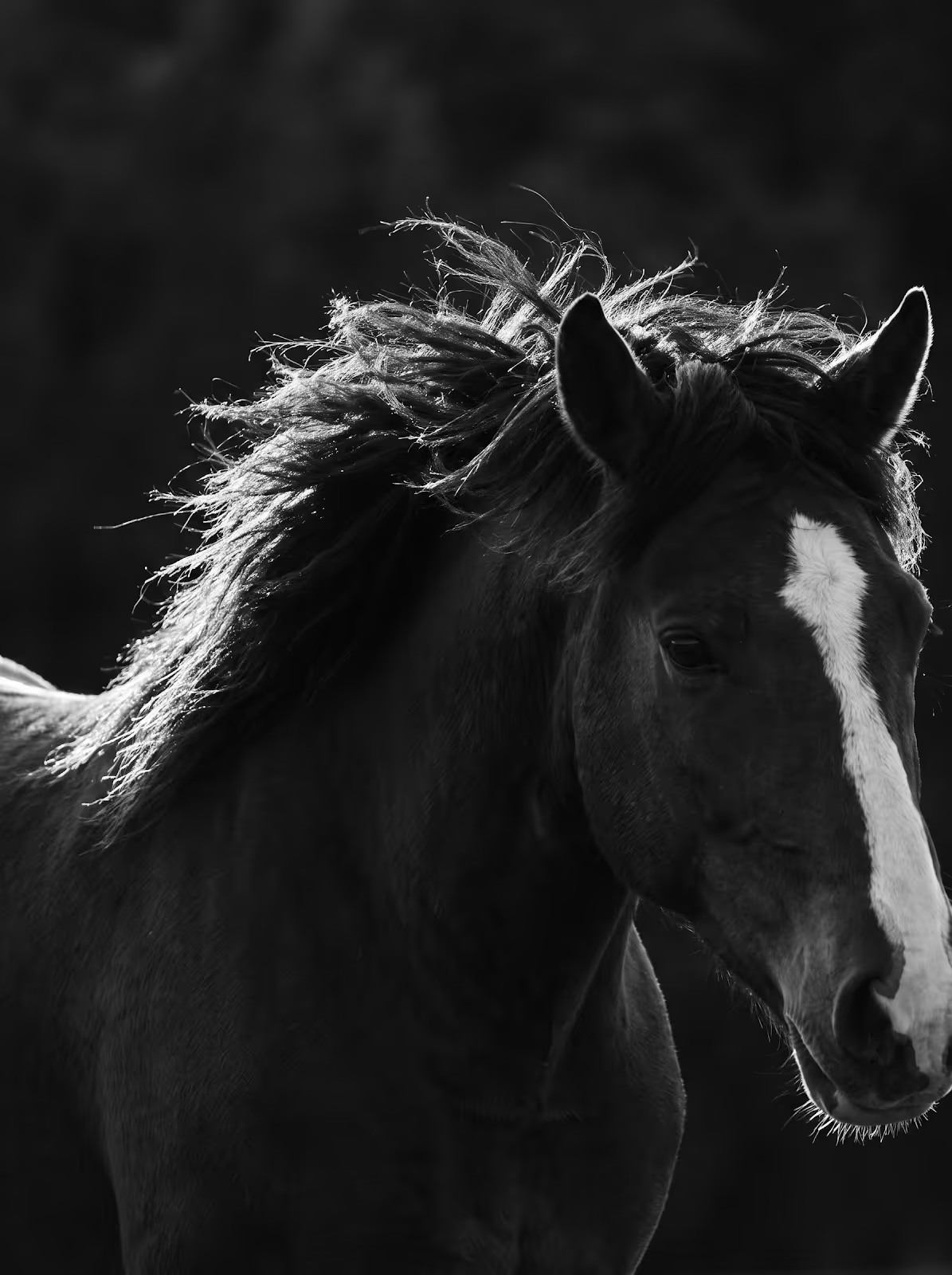
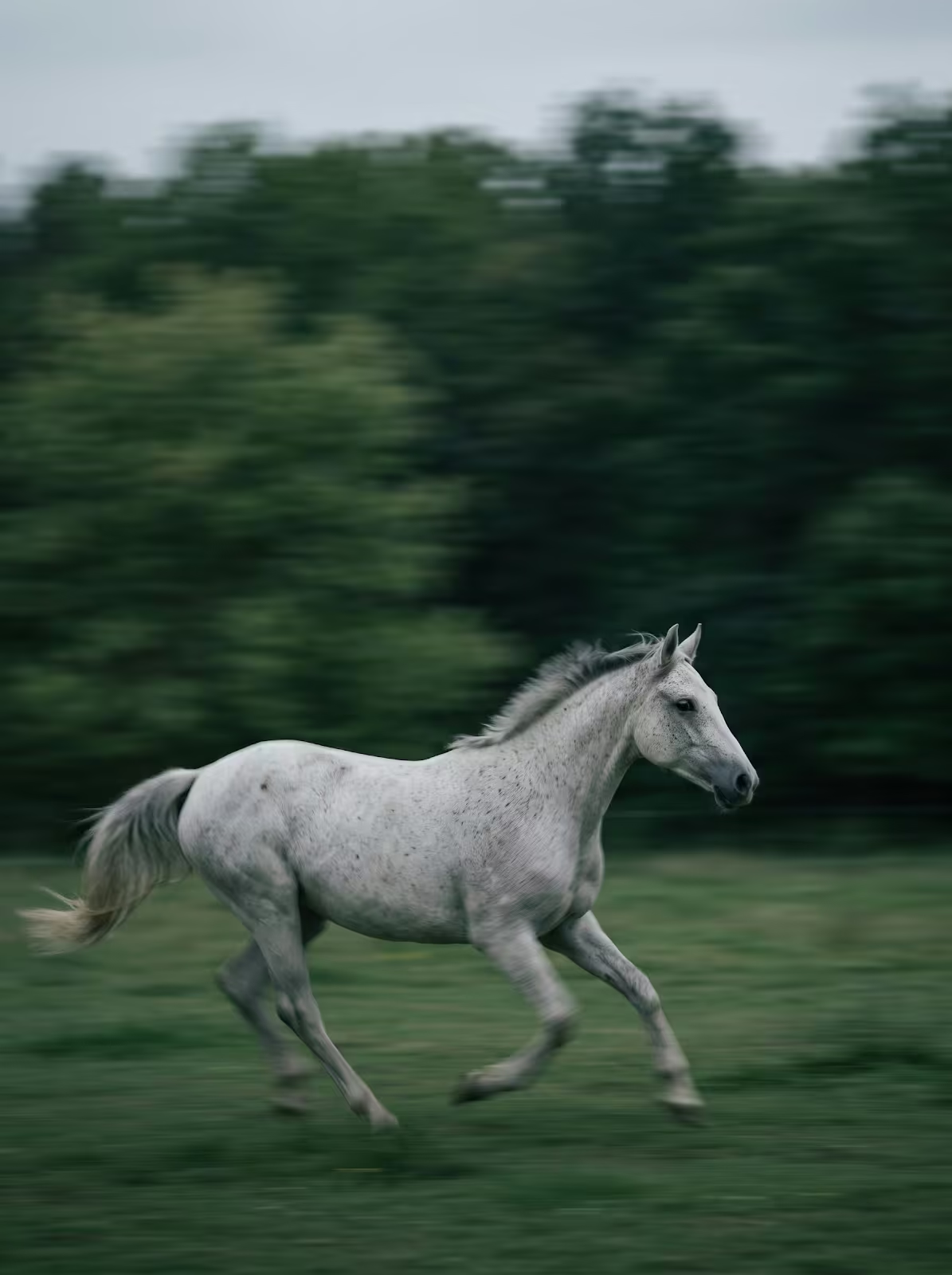
Bloodlines and health come first. Daily work develops what follows.
Bloodlines
Three generations. Both lines.
What this means
We verify three generations on both the sire’s and dam’s side, matching studbook entries to the individual horse’s records. A pedigree provides context; it does not establish health or guarantee future performance.
Care
Training shaped around the horse.
What this means
Development, fitness and the horse’s response to work set the pace. We look at what is reliable and what needs reinforcement before increasing the demands. Rest is part of the training plan.
Judgement
Personal selection. A clear reason.
What this means
We observe movement, cooperation with the rider and responses to a new setting. The breeder’s and trainer’s experience, together with a veterinary assessment, adds context. Only then do we consider the price and the next stage of training.
How we selectFrom selection to a new rider.
1 / 5
Breeder network
Personal contacts in breeding and sport.
Our approach
Breeders and trainers we know introduce horses to us. We follow market prices to assess each opportunity in context.
2 / 5
Bloodlines
Both bloodlines, documented.
Our approach
Three generations on both sides, documented from studbooks. If a line breaks off or does
not match the record, the negotiation ends with it.
3 / 5
Health
Health comes before price.
Our approach
X-rays, a blood profile, the full medical history. A sound horse with an ordinary pedigree
is a better choice for us than an exceptional pedigree with a finding in a joint.
4 / 5
Training
Preparation for junior showjumping.
Our approach
We prepare young horses for junior riders in show jumping. We do not promise that a horse
will win. We promise it will be honestly prepared.
5 / 5
Sale
When training and demand align.
Our approach
We look for a rider whose needs match the horse’s temperament, level and intended use. The sale depends on the horse’s readiness and actual demand.
BloodlinesEvery horse has a story.
We read it back through three generations.
Horse248
Two lines. One whole.
Two parents. The starting point for both lines.
Four grandparents. The context behind a single record.
Eight great-grandparents. The third generation in studbook records.
Selected view: both lines, 8 ancestors in the third generation.
This diagram explains our checks, rather than the pedigree of a particular horse.
The marketValue has a tangible form.
We prepare young showjumping horses for junior riders. Pedigree, health, temperament and training help assess a match; the rider’s needs decide.
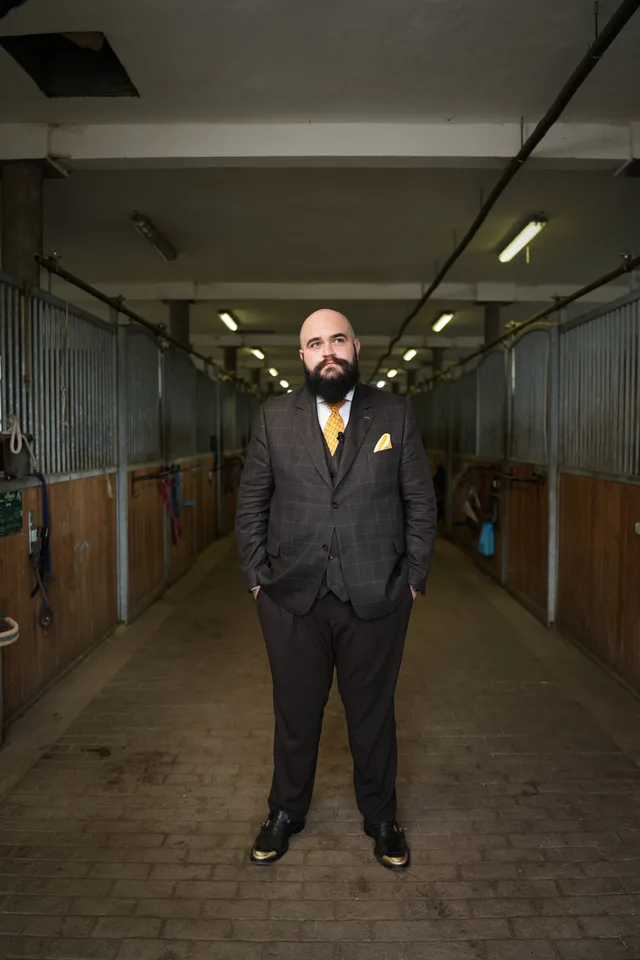
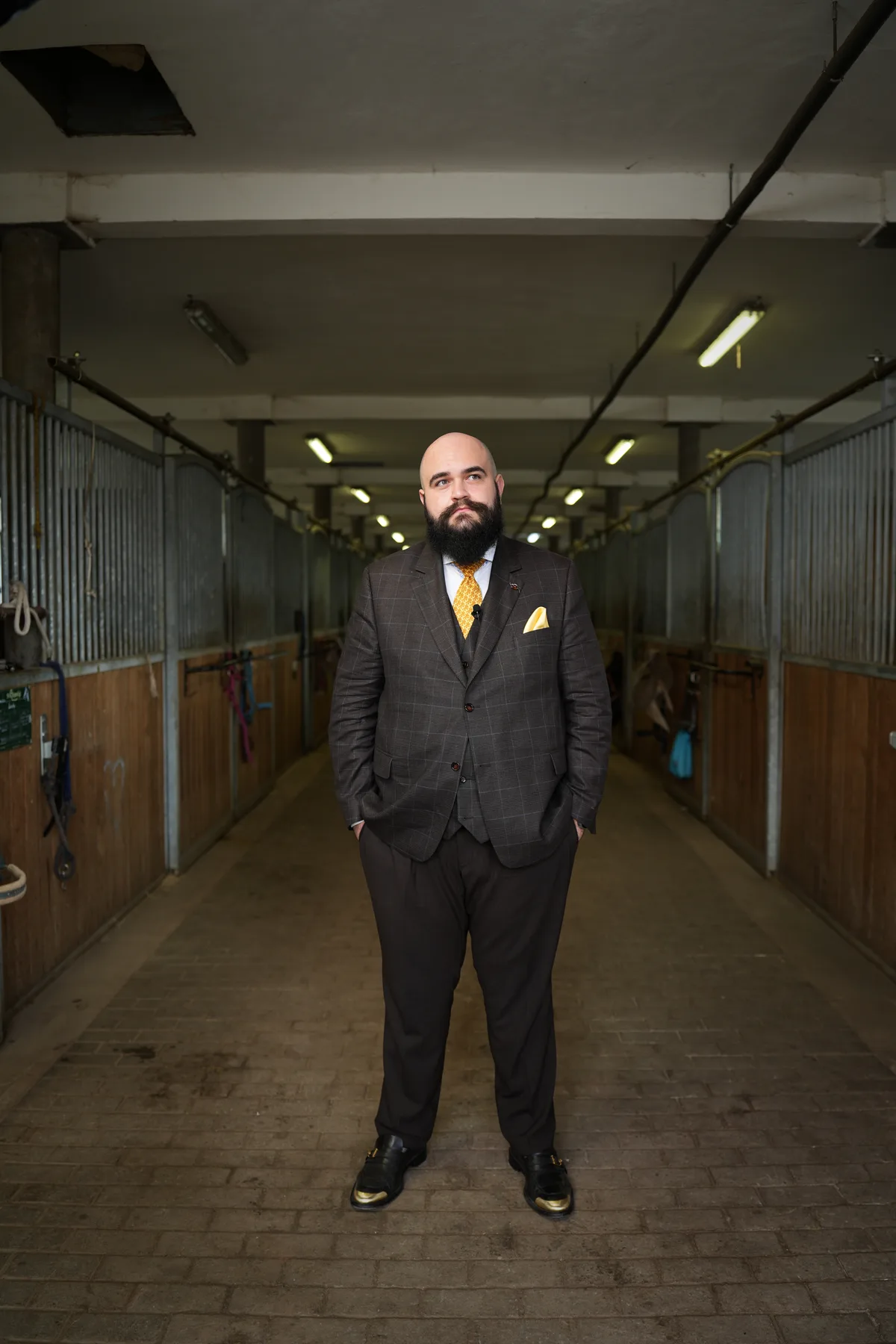
The acquisition partner responsible for horse selection. He combines his own experience with input from breeders, trainers and veterinary assessment. Erwen’s story gives a closer view of that work.
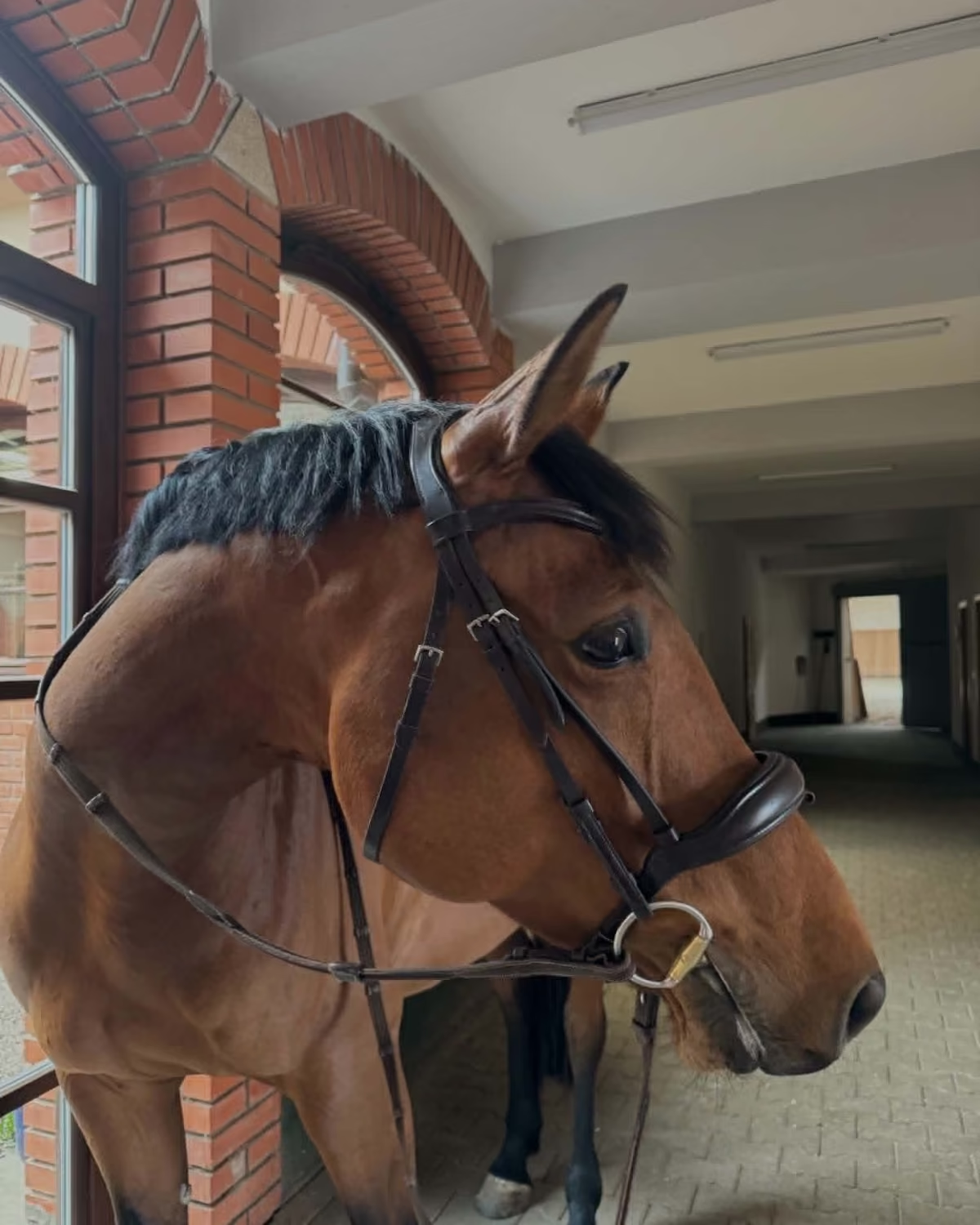
Samuel Kušev · at the stableErwen · actual photograph
A story in practice
Erwen. From selection to training.
Samuel Kušev found her through his breeding contacts. Her training since summer 2024 forms part of his experience before the ATAVUS programme began.
2024Třebotov
ACCOM stables. Training begins.
2025Všetice
Training with Miloslav Příhoda.
Next stageZduchovice
Preparation at the equestrian centre.
More on selection and training
According to Samuel’s account, selection included checks of her bloodlines and health. Her development guided the subsequent training.
From our work
A closer look.
Four short films about pedigree, preparation and the daily work. Original audio and captions are in Czech.
Behind a jump
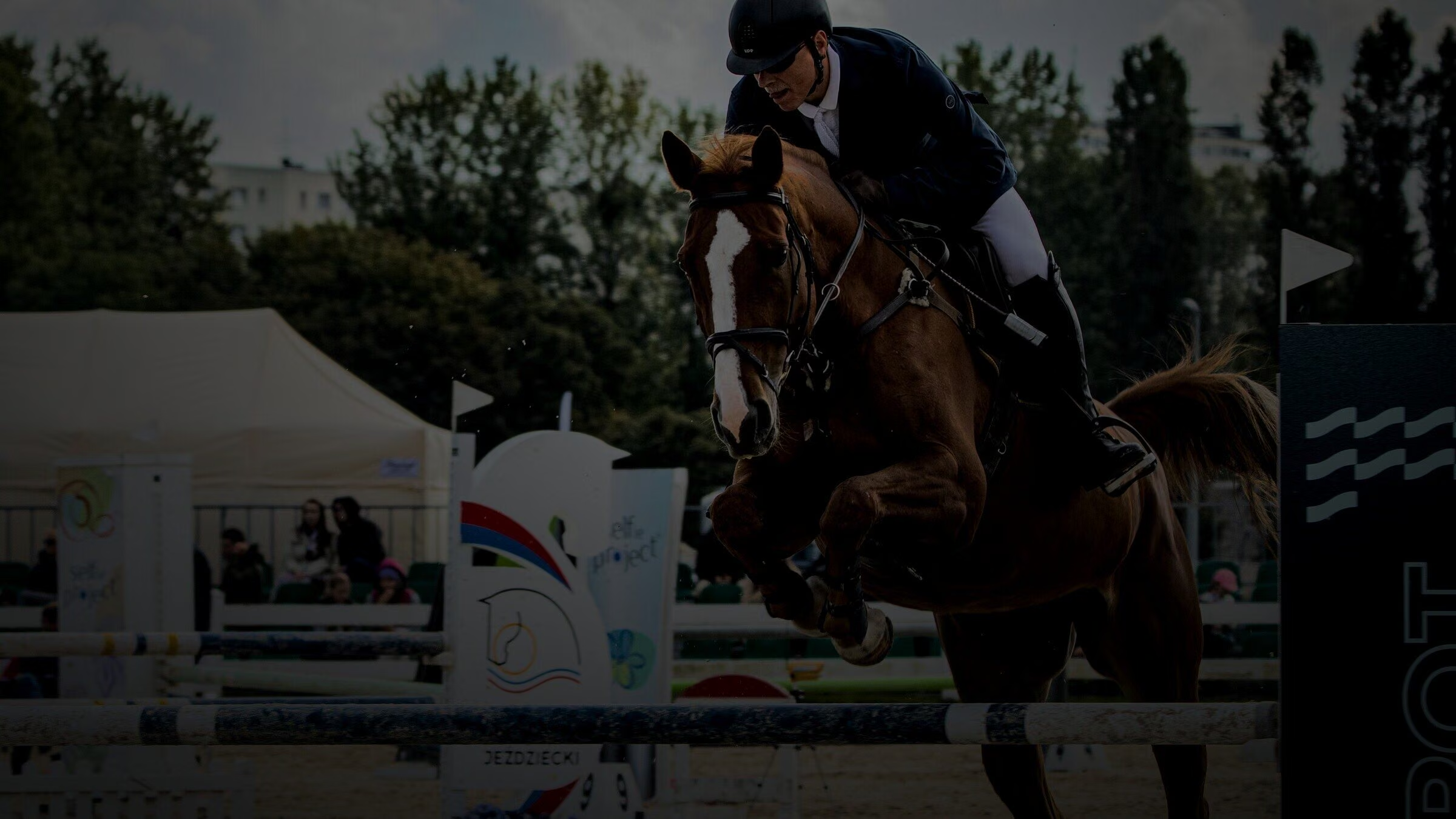
Balance, focus and cooperation. What we look for beyond a few seconds over a fence.
Read the English translation
When you watch a showjumping horse clear a fence, you see just a few seconds. But much more work has gone into that moment. The horse has to learn to balance, judge the take-off, use its body, respond to the rider and stay focused even in unfamiliar surroundings. The rider, in turn, must be able to read the horse's movement and give it the right support at the right moment. That is why, when assessing a showjumping horse, we look beyond an impressive moment and consider all the work that led to it. One good jump does not tell us how the horse will perform over a full course or how it will develop over the next year. We look for consistency, a willingness to cooperate and the ability to handle more demanding situations as its experience grows.
Documenting pedigree
Three generations on both sides. Keeping documented facts distinct from our observations.
Read the English translation
We do not guess a horse's pedigree. We document it. Showjumping horses have exceptionally detailed pedigree records. Studbooks record each bloodline. Before a purchase, we therefore verify at least three generations of ancestors on both sides. A horse cannot enter the ATAVUS programme without a documented pedigree. Pedigree helps us understand the background, but it does not replace an assessment in person. For each horse, we therefore always distinguish documented facts from what we are still observing.
The daily work
The morning routine helps us notice what is normal for each horse and what has changed.
Read the English translation
The most important work with horses looks entirely ordinary. Arriving in the morning and watching how they stand, eat and move. Noticing a change before it becomes a problem. There is no spectacular moment that looks impressive on video. It is the morning routine that shows us what is normal for each horse. That allows us to adjust its work, feeding or rest in good time, or call in a vet. A routine repeated every day. Everything else rests on it.
Experience in the saddle
Timing, reading reactions and adapting the work to what a young horse needs.
Read the English translation
An Olympic rider brings more than experience over high fences. They bring the ability to read a horse accurately, time an aid and adapt the plan to its response. With a young horse, every cue matters because it is still developing the right habits. The rider must know when to support the horse, when to let it think and when to simplify the task. This is how a stable foundation for further performance is built.
Our principlesWhat we stand by.
Verify.
Bloodlines and health history before purchase.
Prepare.
Careful training, with the sale guided by readiness.
Keep trust.
Discretion towards the people we work with.
Meet ATAVUSGet to know our work. Start with a conversation.
Interested in horse selection, training or working with us? Our first conversation starts with what you want to understand.
ATAVUS is being prepared by Atavus, osoba rizikového kapitálu, s.r.o. for asset management
comparable to management under Section 15 ZISIF (Act No. 240/2013 Coll.). The application for registration was filed on 11 August 2026. The company does not yet have a verified
registration on the list maintained by the Czech National Bank and does not accept investments
before registration is verified.
Any registration is evidentiary only, is not a licence, and the activity is not subject to CNB
supervision. This is not a fund for qualified investors, a SICAV, or a collective investment fund.
Who can access the documents?
Access is intended solely for persons meeting the conditions of Section 15(4) ZISIF. Entry
is subject to an individual assessment, satisfaction of all statutory criteria and signature
of a written declaration of risk awareness. This website is informational and is not a public
offer or promotion.
What risks should I consider?
A show jumping horse is a collector's and breeder's asset. It is entered into out of passion and
long-term conviction, not as a product with a promised return. Returns are not guaranteed. The
asset is illiquid and volatile and the capital invested may be lost. Past performance is no
guarantee of future returns.
On what basis do you select horses?
Medical history and X-rays first, then pedigree from the studbooks. The detailed procedure is in the
How we select section above. We do not claim a horse will win. We claim it will be honestly prepared.
What is the time horizon?
Capital is committed for three years. This does not determine how long each horse remains in preparation: that depends on its development and the opportunity for a suitable sale. Immediate liquidity is not promised.
How does selection and preparation work?
Breeders and trainers introduce horses to us. We check their documented pedigree and health history and arrange veterinary assessment. Our team combines these findings with personal observations before purchase and preparation.
Why do you publish no figures?
Detailed figures are shared individually with eligible recipients, together with their context. The public website does not disclose confidential results or investor information.
Where do the horses train?
With our breeding and training partners. Erwen’s story above shows the places involved in her preparation. Visits are arranged in advance.
Get in touchWrite to us. We will call you back.
We will get back to you within two working days, discuss your interest and agree on a next step. Submitting the form requests contact; access to confidential materials is assessed separately.
Samuel KuševSamuel leads horse selection. We will discuss your questions about the horses and their preparation with him.
✓
Enquiry received
We will get back to you within two working days. We send materials only after an individual
assessment and evidence of the statutory conditions.
Where to find usGet in touch.
Registered office
Příčná 1892/4, Nové Město 110 00 Prague 1, Czech Republic